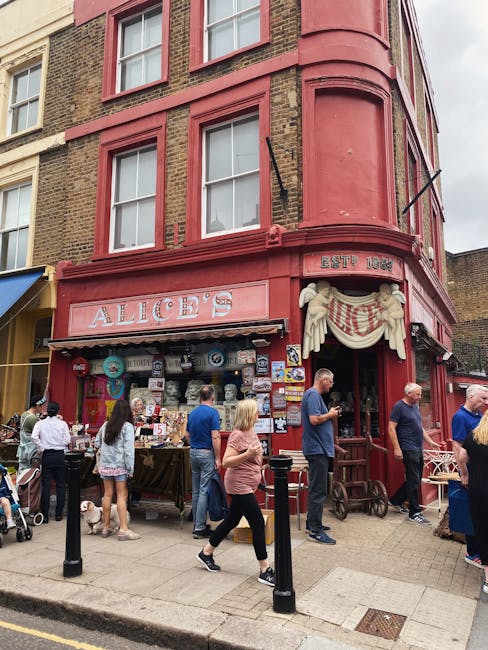
Portobello Market After-Party Waste Pickup in Notting Hill
When the music fades, the glasses are half-empty, and the last guests drift off into the Notting Hill night, the real work begins. Portobello Market after-party waste pickup in Notting Hill is the unglamorous part of a successful event, but it is also the part that protects your venue, keeps neighbours happier, and helps you start the next morning without a mess hanging over you. If you have ever walked out of a lively gathering and seen bins overflowing, broken packaging on the pavement, or sticky spillages around a side entrance, you already know the problem.
This guide breaks down what after-party waste pickup actually involves, how the process works around Portobello Market and the wider Notting Hill area, what to watch out for, and how to organise it properly without turning it into a last-minute scramble. It is written for venue managers, event organisers, private hosts, hospitality teams, and anyone who needs waste cleared promptly and professionally after a night that got a bit bigger than planned. Let's face it, the aftermath is rarely as neat as the invitation.
For readers planning broader cleaning and waste support across London, it can also help to understand how local service pages fit together. For example, if you need general London cleaning support beyond a single event, you may find it useful to explore our London cleaning services and see how specialist jobs are typically organised around time-sensitive work.
Why Portobello Market After-Party Waste Pickup in Notting Hill Matters
Portobello Market and Notting Hill are busy, tightly lived-in parts of London. That matters because waste is not just waste here; it is visible, public, and often collected in spaces where access is limited and timing is tight. A small pile of bagged rubbish behind a venue can become a nuisance very quickly if it blocks a shared walkway, attracts pests, or gets left out after collection windows.
After-party waste pickup also affects how your event is remembered. People remember the atmosphere, yes, but they also remember whether the street looked respected afterwards. Neighbours notice it. Venue staff notice it. And if the next morning starts with a complaint or a blocked back alley, the whole event can feel like it created more trouble than joy. That is not what anyone wants.
In practical terms, the job is about more than simply removing bin bags. It often involves sorting mixed waste, handling recycling separately where possible, clearing food waste before odours build, and making sure glass, packaging, decorations, and disposable service items are taken away safely. If the event involved catering or a bar, the amount of mixed rubbish can be surprisingly high. One table service can generate more waste than people expect. It sneaks up on you.
There is also a reputational element. Notting Hill is a high-footfall area with a strong local identity. A tidy exit signals care, professionalism, and an understanding of the neighbourhood. That is especially important around well-known market streets where loading access, pedestrian flow, and resident sensitivity all shape how waste needs to be handled.
Expert summary: The best after-party waste pickup is fast, discreet, and planned before the event ends. The goal is not just removal, but a clean handover of the space.
How Portobello Market After-Party Waste Pickup in Notting Hill Works
At its simplest, the process starts before the last guest leaves. Good waste pickup is usually built into the event plan, not bolted on at 1 a.m. when everyone is tired and trying to locate the nearest bin. A proper arrangement normally covers what waste will be generated, where it will be stored temporarily, how it will be separated, and when it will be removed.
For after-party work in a busy area like Portobello Market, timing is everything. Waste may need to be collected after the event winds down, but before it causes obstruction or attracts attention. In some cases, pickup is done in a short window once guests have gone. In others, there is a staged clear-out: glass and food waste first, then mixed bags, then final sweep-up. That sequence makes a real difference when the site is tight.
The work usually includes these elements:
- Checking access routes for bins, sacks, and trolleys
- Separating recyclables, food waste, and general rubbish where possible
- Removing breakables and sharp items carefully
- Loading waste into suitable containers or collection vehicles
- Leaving the area swept and free of spillages
- Confirming the site is ready for reopening, handover, or morning trade
In some cases, there is also a coordination layer. Maybe the venue shares a service yard with other businesses. Maybe the street is too narrow for casual loading. Maybe the pickup has to happen quietly because residents are sleeping just above the ground floor. These are the small details that separate a smooth job from a messy one.
If the event is tied to hospitality operations, it can be useful to think about waste pickup as part of a broader end-of-shift clean. A related service such as after builders cleaning in London may not be the same job, of course, but the same principle applies: heavy-duty clear-downs work best when the scope, access, and finish standard are agreed in advance.
Key Benefits and Practical Advantages
There are a few clear reasons people arrange specialist after-party waste pickup rather than relying on a vague "we'll sort it later" approach.
1. Faster turnaround
When waste is collected promptly, the venue can reset quickly. That matters if the space is being used again the next day, or if the landlord expects the area to be clear by a set time. Even a half-hour head start can make the morning calmer.
2. Better hygiene
Food scraps, drink residue, napkins, and organic waste can create smell and hygiene issues very quickly, especially in warmer weather or when bags are left in a sheltered corner. Fast removal helps keep things manageable. No mystery there.
3. Lower nuisance risk
Proper pickup reduces the risk of waste spilling into shared areas, attracting vermin, or bothering neighbouring residents. That is a big deal in mixed-use parts of Notting Hill where living spaces sit close to commercial frontage.
4. Safer handling
After-parties often involve broken glass, cans, catering boxes, cables, disposable decor, and the occasional awkwardly full black bag. Professional handling reduces the chance of cuts, trips, and awkward lifts in cramped access routes.
5. A better public-facing impression
A clean street-level exit helps preserve the tone of the area. Portobello Market has a character all its own; a tidy aftermath respects that character instead of fighting it.
There is also a small but important operational benefit: good waste pickup makes future event planning easier. If your organiser, landlord, or site manager sees that you left the space in good order, it usually makes later approvals less fraught. Not guaranteed, but it helps.
| Benefit | Why it matters in practice | Typical result |
|---|---|---|
| Fast removal | Clears clutter before complaints or obstructions arise | Cleaner handover and calmer morning reset |
| Waste separation | Supports better sorting and fewer contamination problems | More efficient collection |
| Discreet service | Important in residential streets and late-night settings | Less disruption to neighbours |
| Safe handling | Reduces exposure to glass, liquid spills, and heavy sacks | Lower risk of accidents |
| Site readiness | Keeps the venue usable for business or follow-on activity | Stronger operational continuity |
Who This Is For and When It Makes Sense
This kind of pickup is not only for large public events. In fact, some of the trickiest waste jobs come from small-to-medium gatherings where people assume the rubbish will somehow sort itself out. It rarely does.
You are likely to need Portobello Market after-party waste pickup in Notting Hill if you are:
- Running a private party in a flat, townhouse, or hired venue
- Managing a bar, restaurant, cafe, or hospitality space near the market
- Hosting a branded event, launch, or reception with catering
- Overseeing a pop-up, market-adjacent activation, or seasonal gathering
- Coordinating a late finish where normal bin collection is not enough
- Preparing a site for early trade the following day
It makes particular sense if the event includes glassware, catering debris, cardboard packaging, floral displays, temporary signage, table linens, or anything bulky. If you know the space gets messy after midnight and you do not have staff to sort it out properly, a dedicated pickup is usually the sane choice. Truth be told, that sanity is worth paying for.
It is also sensible when the site has awkward access. Narrow stairwells, mews-style entrances, gated yards, and shared passageways all complicate simple rubbish removal. A basic bin run can turn into an all-hands shuffle. Better to plan for it.
Step-by-Step Guidance
If you want the pickup to go smoothly, structure it in stages. The more chaotic the event, the more valuable the structure becomes. Strange how that works.
- Estimate the waste type and volume. Think beyond bag counts. Include bottles, glass, food waste, cardboard, decor, disposable service items, and any damaged items that cannot be reused.
- Map access before the event. Know where bags will be staged, whether there is a back entrance, and how waste will move out without crossing guest areas.
- Separate what can be separated. Keep glass, food waste, mixed rubbish, and recyclable packaging apart where practical. Even a rough sort can save time later.
- Agree a pickup time window. Pick a realistic time. Too early and you interrupt the event; too late and waste sits around overnight. Somewhere in the middle usually works best.
- Prepare the site for fast loading. Use heavy-duty sacks, secure lids, and a clear staging area. A tidy collection point speeds everything up.
- Do a final sweep. Check under tables, behind bars, around entrances, and along the pavement edge. Tiny bits are the ones people notice in the morning.
- Confirm the area is left safe and presentable. The job is not finished until the site is neat, odour-controlled, and ready for use again.
A practical example: a late private celebration near Portobello Road can look tidy inside but still leave bottles, napkins, and takeaway packaging hidden in corners. If the pickup team arrives without a clear route or sorting plan, they lose time immediately. If the route is set and bags are staged near the exit, the whole process feels almost calm. Almost.
Expert Tips for Better Results
There are a few things experienced event teams tend to do that make a noticeable difference. None are dramatic. That is the point.
Keep waste stations visible but not intrusive
Place clearly labelled bins where people naturally pause: near bars, exit points, or catering areas. Guests are far more likely to dispose of rubbish properly if they do not need a scavenger hunt.
Use heavier sacks than you think you need
Thin bags tear exactly when you do not want them to. A double bag may feel unnecessary until a wet load splits on a staircase. Then suddenly it feels very necessary.
Separate glass early
Glass is awkward, noisy, and risky. If you can isolate it before the end of the event, everything afterward gets simpler.
Plan for the quiet finish
In Notting Hill, noise control matters. Dropping bags, dragging bins, and rattling trolleys at the wrong time can undo a lot of goodwill. Sometimes the best move is simply to slow down and be thoughtful about timing.
Check weather and street conditions
Rain changes everything. Wet cardboard collapses. Pavement edges get slippery. A breezy evening can scatter light packaging faster than anyone expects. Sensible teams keep an eye on this and adjust.
Another small tip: keep a final bag for "miscellaneous" items only if it is supervised. Otherwise it becomes a black hole for loose clutter and nobody knows what went where. Happens more often than people admit.
Common Mistakes to Avoid
Most waste problems after an event are not caused by one huge error. They come from a stack of small oversights. A few familiar ones:
- Leaving waste planning until the end. If the event is already over, it is too late to think through access and sorting.
- Mixing everything together. It saves a few minutes upfront and creates a much bigger headache later.
- Underestimating liquid waste. Spills, half-full bottles, and food containers can soak bags and make handling unpleasant.
- Forgetting external areas. Courtyards, pavements, rear entrances, and alley edges are often where the mess hides.
- Ignoring neighbour impact. The issue is not only cleanliness; it is noise, smell, and visibility.
- Using the wrong containers. Overfilled sacks and flimsy bins are an accident waiting to happen.
One of the biggest mistakes is assuming the pickup can be improvised on the night. Sometimes it can, but the result is usually slower and more stressful than it needs to be. A little planning saves a lot of muttering under your breath at 11:45 p.m.
Tools, Resources and Recommendations
You do not need a huge toolkit, but a sensible set-up makes the job much easier. The best tools are the ones that prevent waste from becoming a problem in the first place.
- Heavy-duty waste sacks: Useful for mixed rubbish and high-volume clear-outs
- Clearly labelled bins: Helps guests and staff separate waste more easily
- Gloves and basic PPE: Important for safe handling, especially with glass or wet waste
- Trolleys or moving aids: Helpful for heavier loads or awkward access routes
- Spill materials and wipes: A quick response to leaks keeps the area from becoming slippery
- Final inspection checklist: Stops small items being left behind
From a service planning perspective, it is useful to think about the relationship between waste pickup and the rest of your cleaning schedule. A post-event area may need more than one pass. For instance, if there has been food service or heavy footfall, a follow-up clean can be appropriate after the waste has gone. If your site needs a more complete deep clean after a late event, you may also want to review end of tenancy cleaning in London as a benchmark for thoroughness and final presentation, even if your actual need is an event clear-down rather than a move-out clean.
That said, the best recommendation is simple: match the tools to the real mess, not the one you hoped for. Hope is not a waste strategy.
Law, Compliance, Standards, or Best Practice
Waste pickup in London is not something to treat casually. While every site is different, there are some broad best-practice principles worth respecting. You should always avoid placing waste where it blocks pavements, shared access ways, emergency routes, or neighbour entry points. You should also be careful about storing waste in a way that creates odour, spills, or pest risk.
In practical terms, that means thinking about duty of care, safe handling, and appropriate segregation. Businesses generally need to ensure waste is managed responsibly and handed to properly authorised collectors where required. If you are hosting an event, the responsibility may sit with the venue, organiser, or contractor depending on how the site is run. That bit can get messy, so it is worth clarifying before the event starts.
Local conditions matter too. Around Portobello Market, street access and resident impact are not abstract concerns. They are day-to-day realities. Keep routes clear, respect loading periods, and avoid placing bags where they might block traders, visitors, or neighbours. If you are unsure how a particular venue should handle event waste, the safest approach is to confirm responsibilities in writing and plan the removal schedule in advance.
Best practice usually includes:
- Clear assignment of waste responsibility
- Safe storage before collection
- Separation of recyclables and general waste where practical
- Prompt removal after the event
- Minimal disruption to nearby homes and businesses
In other words, keep it orderly, keep it safe, and do not leave the aftermath to chance.
Options, Methods, or Comparison Table
There is no single perfect method for every after-party. The right choice depends on venue size, access, waste volume, and the time available before the next use of the space.
| Method | Best for | Pros | Limitations |
|---|---|---|---|
| In-house clear-down | Small gatherings with low waste volume | Quick, flexible, low coordination | Can be rushed, incomplete, or physically demanding |
| Planned contractor pickup | Busy events, hospitality spaces, and larger parties | Structured, faster, more reliable | Needs early booking and clear instructions |
| Staged overnight clearance | Events ending late with restricted access | Reduces disruption during peak hours | Requires secure storage until collection |
| Combined waste and final clean | Sites needing a polished handover | Best presentation outcome | Usually more involved and time-sensitive |
For many Portobello Market and Notting Hill jobs, a combined approach works best: immediate waste removal for the obvious rubbish, followed by a final sweep so the site is genuinely ready. A half-done finish is easy to spot. Very easy.
Case Study or Real-World Example
Picture a Friday-night celebration in a venue just off the Portobello Market area. Guests arrive from early evening, food is served in waves, and the bar gets busier after 9 p.m. By the time the last song plays, the inside looks decent at first glance, but the details tell a different story: a stack of cardboard from deliveries, glass bottles by the bar, used napkins around the seating area, and a few bags already starting to smell because of leftover food.
The organiser had already planned a pickup window for after close. That meant sacks were staged in one back area, glass was separated, and the final clear-down took less time than expected. The team also checked the alley exit before collection, which avoided a pointless double-back with heavy bags. Nothing flashy. Just thoughtful preparation.
What made the difference was not speed alone. It was the sequence. Waste was separated first, loaded second, and the site was swept last. By the next morning, the venue could reopen without a tense apology to the landlord or a scramble to remove missed rubbish. The event still had the lively, slightly chaotic energy of a good night out, but the aftermath did not carry that chaos into the morning.
That is really the standard to aim for: not perfection, just a clean handover that feels considered and calm.
Practical Checklist
Use this checklist before and after an event to keep the pickup under control.
- Confirm the end time and the pickup window
- Identify the waste types likely to be generated
- Set aside a clear staging area for bags and containers
- Provide enough bins for guests and staff
- Separate glass, food waste, and mixed rubbish where possible
- Check that access routes are open and safe
- Keep gloves, wipes, and basic spill materials available
- Do a final sweep of hidden corners and outdoor edges
- Remove waste promptly after the event ends
- Inspect the space for odours, spillages, or stray debris
- Confirm the site is left tidy for neighbours, staff, or morning trade
Quick takeaway: if you have a clear route, sorted waste, and a booked pickup window, you are already ahead of most event clean-downs. Simple, but effective.
If you are comparing service options or planning recurring support, it is worth looking at the wider scheduling picture too. For some clients, a one-off pickup is enough; for others, regular waste and cleaning support avoids the same problem returning every weekend. No drama, just consistency.
Get a free quote today and see how much you can save.
Conclusion
Portobello Market after-party waste pickup in Notting Hill is really about control: control of timing, control of presentation, and control of the small details that can turn a lively night into a messy morning. When the waste is handled properly, the event feels more professional, the venue resets faster, and the surrounding area is treated with the respect it deserves.
Whether you are organising a private celebration, a hospitality event, or a late-finishing market-adjacent gathering, the same truth applies. Plan early, separate waste sensibly, keep access clear, and do not leave the clean-up to chance. That bit of structure pays off every time.
And once the lights are off and the last bag is gone, there is something quietly satisfying about seeing the space reset and ready again. A small thing, maybe. But in a place like Notting Hill, small things count.
Frequently Asked Questions
What is Portobello Market after-party waste pickup in Notting Hill?
It is a scheduled waste removal and clear-down service for the rubbish left after a private event, hospitality gathering, or late-night party near Portobello Market in Notting Hill.
Why is after-party waste pickup important in this area?
Because the area is busy, residential, and often access-limited. Prompt waste removal helps avoid complaints, odours, blocked walkways, and awkward morning clean-ups.
How soon should waste be collected after an event?
As soon as practical after the event finishes, but not so early that you disrupt guests. The ideal timing depends on access, noise considerations, and how much waste is being produced.
Can food waste, glass, and general rubbish be collected together?
They can be, but it is usually better to separate them where practical. Sorted waste is easier, safer, and more efficient to remove.
What kind of events usually need this service?
Private parties, receptions, bar or restaurant events, pop-ups, and any gathering that leaves behind mixed waste, packaging, or catering debris.
Is this the same as a regular rubbish collection?
Not quite. After-party waste pickup is usually more immediate, more hands-on, and more focused on restoring a venue or event space quickly.
How do I avoid problems with neighbours?
Keep noise low during clear-down, avoid blocking shared access, and remove waste promptly. Small courtesies make a big difference in mixed-use streets.
What should I prepare before the pickup team arrives?
Waste should be grouped in accessible areas, access routes should be clear, and any fragile or sharp items should already be isolated if possible.
Do I need a separate clean after waste pickup?
Sometimes, yes. If there has been food service, spills, or heavy footfall, a follow-up clean may be needed to leave the space fully presentable.
What are the most common mistakes people make?
Leaving planning too late, overfilling bags, mixing waste types, forgetting external areas, and assuming the job can be improvised at the end of the night.
How do I choose the right service for my venue?
Look at access, waste volume, timing, and how polished the final presentation needs to be. The right service is the one that matches the reality of the site, not just the event brief.
Is it worth arranging waste pickup for smaller parties?
Yes, if the space is tight, the event is late, or there will be a lot of packaging, bottles, or catering waste. Small gatherings can create surprisingly awkward clean-ups.
What should I expect from a professional after-party pickup?
Clear communication, timely arrival, careful handling of waste, discreet work where needed, and a tidy final handover of the space.